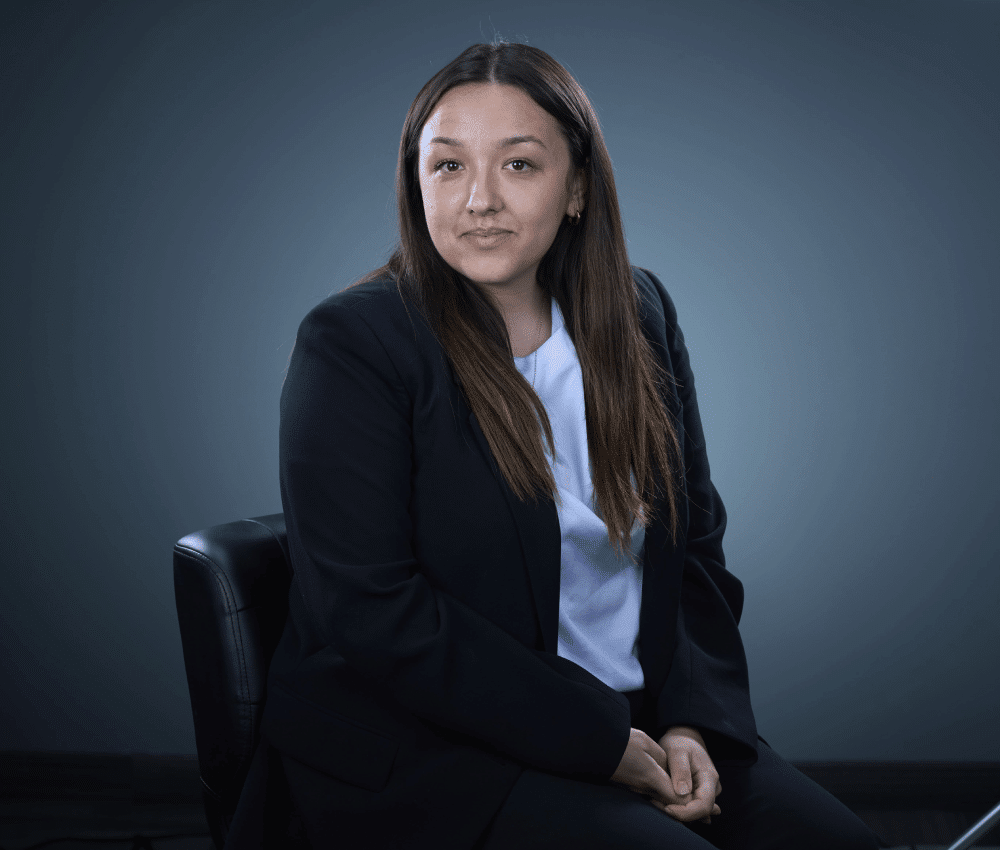
Cassandra Harvey at the Senate: Three Priorities for Bill S-235

Venue: Standing Senate Committee on Human Rights | Date: November 2, 2026 | Bill: S-235, National Strategy to Combat Human Trafficking Act | Format: Committee hearing video | Subject: Cassandra Harvey, Advocate, Diamond and Diamond Lawyers

Cassandra Harvey, an advocate with Diamond and Diamond Lawyers and a survivor of human trafficking, appeared before the Standing Senate Committee on Human Rights on November 2, 2026. The committee is studying Bill S-235, which would turn Canada’s National Strategy to Combat Human Trafficking into a legal obligation.

Drawing on her own experience, Cassandra set out three priorities for the bill: preventing recruitment into trafficking, addressing financial coercion, and strengthening the governance of the Survivor Advisory Committee.

Watch Cassandra at the committee

Cassandra’s opening statement runs from 16:10:37 to 16:16:24 in the recording, and she speaks again at 16:29:08 and 16:32:36.

Watch the November 2 meeting on Senate ParlVU

This page is a summary, not an official record of the proceedings. The Senate of Canada’s recording and transcripts are the official source.

Priority 1: Stop recruitment before it starts

Cassandra told the committee that prevention has to address recruitment into trafficking as well as vulnerability to exploitation. She recommended that section 3 of the bill explicitly require targeted prevention and early intervention for youth at risk of recruitment, particularly young men.

She also called for federal funding to support:

  • Education through schools and community organizations, beginning in early adolescence, on coercive control, online recruitment, sexual exploitation and criminal consequences
  • Mentorship and intervention for youth at risk of gang involvement, including outreach work, counselling and pathways into education and employment
  • Prevention for youth in child welfare, including trafficking risk assessment, stable housing and transition planning

She said this funding must require measurable outcomes, independent evaluation and transparent reporting.

“We should measure whether recruitment risks are reduced and not simply how many workshops have been delivered.”

Priority 2: Address financial coercion in the strategy

Cassandra urged the committee to expressly address financial coercion in the National Strategy. She explained that traffickers can misuse a survivor’s identity at the provincial and federal levels through tax fraud, government benefit overpayments and tax liabilities, control a survivor’s finances and take on debts in their name.

She spoke from experience. Cassandra told the committee that she has dealt with $65,000 in coerced debt for the last five years, and that she has spent the last two years in a battle with the Canada Revenue Agency (CRA) to have it cleared at the federal level. She said she was accepted into law school but cannot afford to attend or obtain education financing.

“The very systems that have been intended to support my recovery have become barriers to my education and financial independence.”

She recommended dedicated, sustainable federal funding for frontline organizations to provide financial coercion prevention, public education, financial literacy and training for social workers, educators, shelter staff and community workers. She said that training must extend to CRA employees and all federal employees.

Priority 3: Give survivors meaningful authority

Cassandra told the committee that representation alone does not guarantee meaningful authority, independence or accountability. She recommended dedicated hearings on the Survivor Advisory Committee, saying the subject cannot be adequately addressed within two days of hearings.

She also recommended that survivor advisory positions be salaried professional roles with adequate benefits, building transferable skills in policy analysis, legislative review, program evaluation and governance.

“Survivors should not be expected to contribute their lived experience through occasional honoraria while other professionals are compensated for their time.”

Cassandra closed by urging the committee to ensure the bill delivers measurable prevention, financial recovery and lasting institutional accountability.

“A national strategy must do more than combat human trafficking, it must address recruitment, address the financial consequences of exploitation, and establish accountable institutions where survivors hold meaningful roles.”

What Bill S-235 would do

Bill S-235, sponsored by Senator Salma Ataullahjan, would require the Minister of Public Safety and Emergency Preparedness to maintain and update the National Strategy. As introduced, it would also require a review within two years of coming into force and every five years after that, along with an annual report to Parliament on progress.

The bill puts people with lived experience at the centre of that work. As introduced, the strategy would have to include measures to:

  • Help people with lived experience regain their independence and reintegrate into their communities
  • Promote sufficient investment in services that support them
  • Provide federal government employees with ongoing, trauma-informed training
  • Ensure that members of the Survivor Advisory Committee, and the Chief Advisor to Combat Human Trafficking, have lived experience of human trafficking

The review process would also require the Minister to consult people with lived experience.

As of November 4, 2026, the bill remains at committee in the Senate. It must still clear report stage and third reading in the Senate, then every stage in the House of Commons, before it can become law.

Her work on survivors’ debt

Cassandra also initiated House of Commons petition e-7839, which calls on the federal government to create a clear way for survivors of human trafficking, sexual violence and domestic violence to seek relief from federal debts, tax liabilities and benefit overpayments that result directly from their exploitation. The petition is open for signature until February 19, 2027.

Read petition e-7839 on the House of Commons website

About Cassandra Harvey

Cassandra is a survivor of human trafficking and an advocate at Diamond and Diamond Lawyers, where she raises awareness about sexual assault and human trafficking through education and empowerment. Read Cassandra’s profile.

Support is available

If you are in immediate danger, call 911. The Canadian Human Trafficking Hotline is confidential and available 24/7 at 1-833-900-1010.

If you have experienced sexual assault or exploitation, you deserve to understand your rights. The team of lawyers at Diamond and Diamond have experience handling sexual assault claims. Call our 24/7 hotline at 1-800-567-HURT to speak with someone in confidence. We offer free consultations, and our team of lawyers represents clients across Canada.

Leave a Reply


Need a Lawyer?

We are here 24/7 to address your case. You can speak with a lawyer to request a consultation.

1-800-567-HURT

Get started with a free consultation