




Ronald D. Davis in Canadian Lawyer: Privacy Law at the Boiling Point
Publication: Canadian Lawyer | Date: September 29, 2026 | Article title: “Privacy law at the boiling point” | Format: Premium feature interview Ronald D.…
Read article →Prenatal screening exists so that families can learn about a serious condition early, understand it, and prepare. When spina bifida goes undetected despite screening designed to find it, parents lose options they were entitled to and a child may miss care that could have changed their outcome.

Spina bifida is a neural tube condition. It occurs when the spine and spinal cord do not close fully during the early weeks of pregnancy, leaving an opening that can affect the vertebrae, the spinal cord, and the surrounding nerves. Its most serious form, myelomeningocele, can affect mobility and bladder and bowel function.
Prenatal care in Ontario is built in layers so that an open neural tube condition has more than one chance of being identified — maternal serum screening, and the detailed anatomy ultrasound usually performed around 18 to 20 weeks. Where findings are unclear, further testing can follow. A claim does not arise simply because a condition was not found. It arises when the care fell below what a reasonably competent practitioner would have provided.
The team of lawyers at Diamond and Diamond have experience handling missed prenatal diagnosis claims for clients across Canada. Scheduling a consultation is the first step toward understanding your rights and determining the strength of your case.
Past results are not necessarily indicative of future results and the amount recovered and other litigation outcomes will vary according to the facts in individual cases.
Fill out our simple form for a free case evaluation — getting started with Diamond & Diamond is quick and straightforward.
Our legal team reviews your prenatal records, serum screening results, and ultrasound images and reports to assess whether the accepted standard of care was met.
If we take on your case, we pursue compensation for the loss of informed choice and the additional care your family now needs.
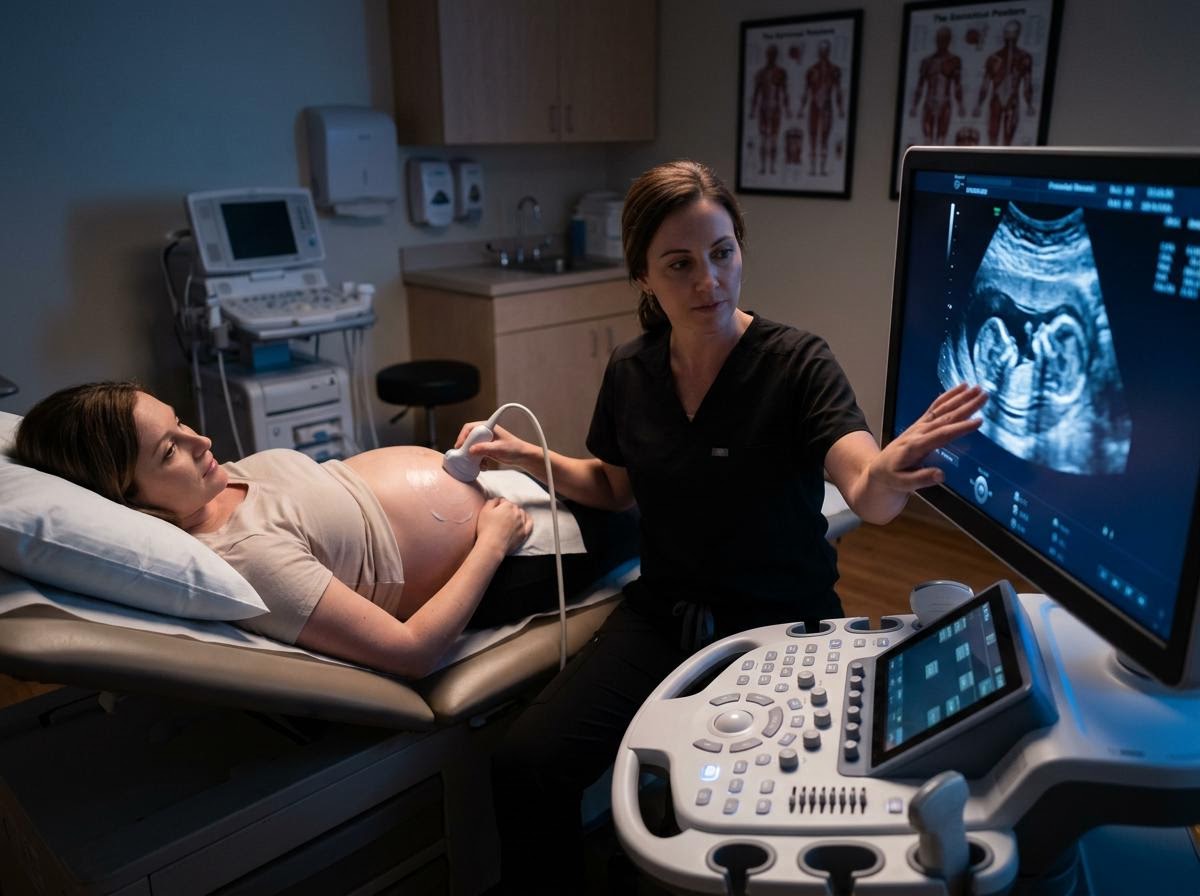
The detailed anatomy ultrasound is the central tool for detecting an open neural tube condition. Sonographers examine the spine directly, and also look for recognised cranial markers that frequently accompany the condition — changes in the shape of the skull and of the cerebellum, along with fluid on the brain. When those markers are present, they are expected to prompt careful follow-up.
Maternal serum screening can also raise the question earlier. An elevated alpha-fetoprotein level is a recognised signal of an open neural tube condition that warrants further investigation. Where results are unclear or concerning, further testing such as amniocentesis or fetal MRI can add detail about the extent of the condition.
Canada's national guidance in this area is SOGC Guideline No. 410 on the prevention, screening, diagnosis, and pregnancy management of fetal neural tube conditions. It sets out the approach a care team is expected to follow, and it is often the reference point when the adequacy of screening is assessed.

Screening has genuine limits, and no tool identifies every case. The law recognises this. The question is never simply whether something was missed, but whether the care surrounding the screening met the accepted standard.
Because prenatal care generates a dated record — results, images, reports, and referrals — these claims often turn on what was visible at the time and what was done about it.
"If you believe a prenatal diagnosis was missed, request your complete prenatal file — including serum screening results, all ultrasound images and written reports, and referral correspondence. These will greatly assist your legal team in reviewing your case."— Diamond & Diamond Lawyers

A timely diagnosis is not only information. It opens doors that close as a pregnancy progresses — the possibility of specialist management, a carefully planned delivery at a hospital equipped for immediate care, and the chance for a family to prepare, seek counselling, and make decisions with full knowledge.
In a claim of this kind, the loss the law recognises is the loss of accurate information and the opportunity to make an informed decision, together with the additional costs of care that follow. A child's life is never treated as the harm, and these claims are approached with that firmly in mind. Claims commonly cover the additional costs of medical treatment, therapy, mobility equipment, home and vehicle modifications, attendant care, and the income a parent loses in providing that care.
Non-financial damages — such as pain and suffering — are more qualitative. Courts evaluate these based on previous case law that attributes a financial value to the impact of the injury or impairment on a person's life. Family members may also have claims of their own for loss of care, guidance, and companionship.
Speak directly with our legal team. Free consultations available 24/7.
Sonographers, radiologists, obstetricians, family physicians, and midwives each have a duty to provide care that meets the accepted standard. When that duty is breached and a family is deprived of information they needed, you need a legal team with the experience and resources to navigate the complexities of medical malpractice law.
The team of lawyers at Diamond and Diamond have experience handling these claims and will work to protect your family's rights while providing you with clear, honest legal guidance throughout the process. Diamond and Diamond has offices in Ontario, Alberta, British Columbia and Nova Scotia, and the team handles medical malpractice claims for clients across Canada.
Avoid making contact with other parties involved in your case. Your lawyers from Diamond and Diamond should be your main point of contact in any medical malpractice matter. Contact our law firm now to discuss your case.

Explore more relevant practice areas and case types.
The foundation of any medical malpractice claim rests on proving that the health care provider fell below the accepted standard of care. Here that means showing that a reasonably competent practitioner, presented with the same images, results, and history, would have identified the finding or arranged further investigation.
Establishing this standard typically requires evidence from qualified medical professionals who can speak to acceptable practice in obstetric imaging and prenatal care. An experienced personal injury lawyer at Diamond and Diamond can help you navigate this process.

No screening tool identifies every case, and some presentations are genuinely difficult to detect. A condition that was not found is not, by itself, evidence that anyone was careless.
What separates a recognised limitation from a claim is the surrounding care: whether the indicated test was performed, whether visible findings were identified, whether unclear results were followed up, and whether the family was told what was known when it was known.

Request your complete prenatal file, including serum screening results, every ultrasound image and written report, referral letters, and clinic notes. Write down the sequence of appointments and what you were told at each one.
Avoid discussing a potential claim with the providers involved in your care. Your next step should be to contact a personal injury lawyer with experience in medical malpractice cases, who can evaluate your situation during a free consultation.

Call NOW for a free consultation
Publication: Canadian Lawyer | Date: September 29, 2026 | Article title: “Privacy law at the boiling point” | Format: Premium feature interview Ronald D.…
Read article →
Darryl Singer, head of the Class Actions Department at Diamond and Diamond Lawyers, spoke with Cabin Radio about Meta's multi-billion-dollar U.S. settlement, the teen…
Read article →
When a baby arrives, families quickly encounter a team of physicians whose titles sound similar but whose roles are distinct. Two of the most…
Read article →Browse clear, plain-language answers to the questions we hear most about medical malpractice claims.
See All Medical Malpractice FAQsThis page provides general information about Canadian law and is not legal advice. Health care is regulated provincially and territorially, so the legislation, regulators and standards that apply depend on where you were treated. Every situation is different. For advice about your circumstances, speak with a lawyer.