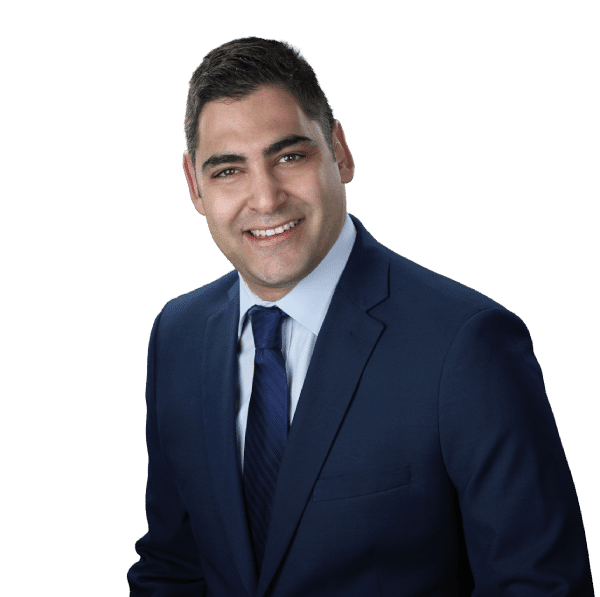
Jeremy Syrtash in The Litigator: The Biased Expert at Trial

Publication: The Litigator, Winter 2023 edition | Publisher: Ontario Trial Lawyers Association (OTLA) | Article title: “The Biased Expert: Current Jurisprudence and Best Practice Tips” | Author: Jeremy Syrtash

Jeremy Syrtash’s article, “The Biased Expert: Current Jurisprudence and Best Practice Tips,” was published in the Winter 2023 edition of The Litigator, the flagship publication of the Ontario Trial Lawyers Association (OTLA). The article examines how trial counsel should handle a biased expert witness — whether their own or the opposing party’s — and what the current jurisprudence requires of a trial judge.

Why a biased expert matters

Expert evidence often sits at the centre of a personal injury or medical malpractice trial. Because it arrives through a witness with impressive credentials and is framed in technical language, there is a real risk a jury will treat it as more reliable than it deserves. Canadian law therefore places a special duty on expert witnesses to provide fair, objective and non-partisan assistance to the court. The framework comes from White Burgess Langille Inman v. Abbott and Halliburton Co., 2015 SCC 23, which sets out a two-stage test for admitting expert evidence and gives the trial judge a continuing “gatekeeper” role. When an expert crosses the line from impartial witness into advocate, the consequences can be serious — up to and including a new trial.

What the article covers

The two-stage admissibility test. Jeremy walks through the framework from White Burgess and R. v. Abbey: relevance, necessity in assisting the trier of fact, the absence of an exclusionary rule, and a properly qualified and impartial expert, followed by the trial judge’s cost-benefit weighing of the evidence’s benefits against its risks.

The trial judge as gatekeeper. Drawing on the Ontario Court of Appeal’s 2017 decision in Bruff-Murphy v. Gunawardena, the article explains that a judge’s gatekeeper role does not end once an expert has been qualified. Where bias becomes apparent during testimony, the judge must continue to act — through a mid-trial or final instruction, or by inviting submissions on a mistrial.

The duty to act, even without an objection. Using the 2021 decision in Parliament v. Conley, the article shows that a trial judge must caution the jury about a biased expert even when opposing counsel has not asked for it, and that a failure to do so can taint the verdict and require it to be set aside.

Best practice tips for counsel. Practical guidance on both sides of the problem: how to instruct your own expert so the report never opines on the credibility of the parties or makes findings of fact, and how to expose an opposing party’s biased witness; raising the concern at the qualification stage, during cross-examination, and on the record before the jury charge, so the issue is preserved for any future appeal.

Why this matters in personal injury and medical malpractice claims

In injury and medical malpractice litigation, expert opinion frequently shapes the central questions in a case: whether the standard of care was met, what caused an injury, and the extent of a person’s losses. The principles Jeremy discusses: impartiality, the limits of an expert’s proper role, and the trial judge’s duty to protect trial fairness, apply in nearly every case where competing experts are called. For injured Ontarians, they help explain why the independence of an expert witness can be just as important as their credentials.

📄 Read the full article: The Biased Expert: Current Jurisprudence and Best Practice Tips — originally published in The Litigator (Winter 2023).

About The Litigator

The Litigator is the flagship publication of the Ontario Trial Lawyers Association, the professional association representing personal injury and civil litigation lawyers in Ontario. It is one of the principal venues for substantive professional writing by Ontario’s plaintiff-side litigation bar.

About the author

Jeremy Syrtash is Head of Medical Malpractice Litigation at Diamond & Diamond Lawyers LLP and a member of the Ontario Trial Lawyers Association (OTLA). His practice focuses on medical malpractice litigation, including pediatric and obstetrical negligence and wrongful death claims, with trial and appellate experience across several Canadian jurisdictions.

This article was originally published in The Litigator (Winter 2023), a publication of the Ontario Trial Lawyers Association. It is reproduced here with the Association’s permission.


This article was originally published in The Litigator (Winter 2023), a publication of the Ontario Trial Lawyers Association. It is reproduced here with the Association’s permission.

Leave a Reply


Need a Lawyer?

We are here 24/7 to address your case. You can speak with a lawyer to request a consultation.

1-800-567-HURT

Get started with a free consultation