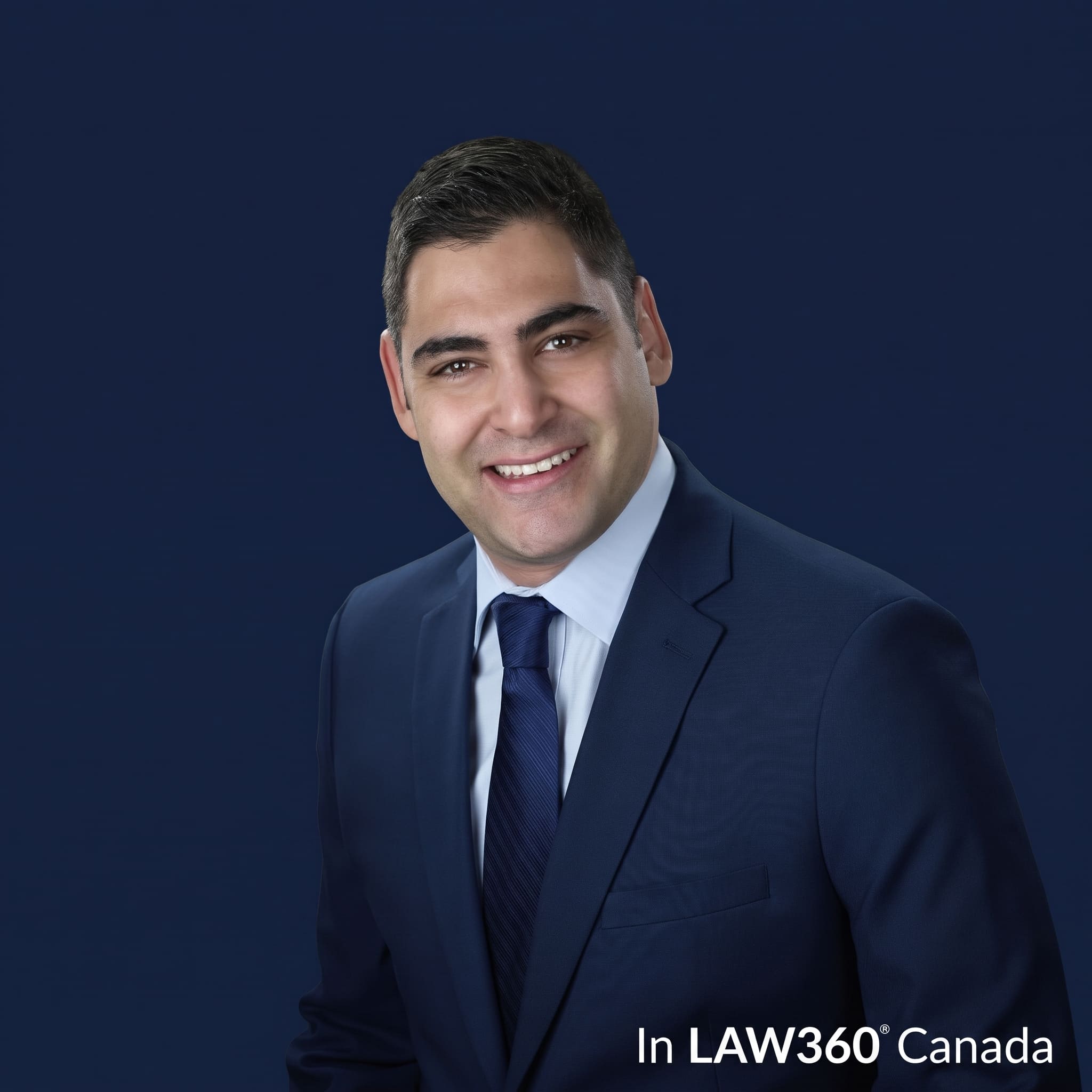
Jeremy Syrtash in Law360 Canada: Why Birth Injury Claims Differ From Other Personal Injury Cases

Jeremy Syrtash in Law360 Canada: Why Birth Injury Claims Differ From Other Personal Injury Cases

Publication: Law360 Canada | Date: November 9, 2026 | Article title: “Birth injury claims: Why they differ from other personal injury cases” | Format: Bylined analysis (subscription required)

Jeremy Syrtash, Head of Medical Malpractice Litigation at Diamond & Diamond Lawyers LLP, has written an analysis for Law360 Canada on why birth injury claims are unlike any other personal injury case. Writing for lawyers and families alike, Jeremy explains why these claims sit at the most complex end of medical malpractice litigation in Canada: they turn on events that can unfold in minutes, they rarely leave a clear record of why a clinician made a particular choice, and they produce some of the largest damages awards Canadian courts see.

Read the full article on Law360 Canada (a Law360 Canada subscription is required).

What is a birth injury?

A birth injury is harm to a newborn, and sometimes to the mother, that happens during pregnancy, labour or delivery. The cases that become legal claims usually involve an allegation that the harm was preventable. Jeremy points to common examples: brain injury from oxygen deprivation during labour (hypoxic-ischemic encephalopathy, or HIE), which can lead to cerebral palsy; nerve injuries to the baby’s arm or shoulder, such as Erb’s palsy; a delayed response to signs of fetal distress or a delayed caesarean section; and injuries from the improper use of forceps or a vacuum.

Is every birth injury caused by negligence?

No, and Jeremy calls this the point families and the public most often misunderstand. Childbirth carries real risks, and some injuries happen even when every clinician meets the expected standard of care. To succeed, a claim has to show that the care fell below what a reasonable, prudent practitioner would have provided in the same circumstances. A bad outcome on its own is not enough, and neither is the argument that a different choice might have worked out better in hindsight.

Why is causation so hard to prove?

Even when the care clearly fell short, the family still has to prove that the substandard care caused the injury. Canadian courts apply the “but for” test set out by the Supreme Court of Canada in Clements v. Clements, 2012 SCC 32. In birth injury cases, Jeremy describes this as the steepest hill to climb. A baby’s brain injury can stem from a problem during pregnancy, an infection, a genetic condition or an event during delivery, so answering the question often means reconstructing labour minute by minute from fetal heart-rate tracings, nursing notes, blood gas results and imaging.

Who defends physicians in Canadian birth injury cases?

Most Canadian physicians are defended by the Canadian Medical Protective Association (CMPA), a well-funded mutual defence organization. Obstetrics is one of the areas where these cases arise most often: CMPA data shows obstetricians faced significantly higher rates of civil legal actions than CMPA members overall between 2015 and 2024. Jeremy notes that the CMPA plays a legitimate role, and that the strength of the defence means a birth injury claim has to be thoroughly prepared from the outset.

Why are birth injury awards so large?

It isn’t pain and suffering. Canadian damages for pain and suffering are capped under a limit the Supreme Court of Canada set in 1978 in Andrews v. Grand & Toy Alberta Ltd., adjusted for inflation since, no matter how catastrophic the injury. The large figures come from the cost of care. A child with a severe birth injury may need lifelong attendant care, therapy, adaptive equipment and home modifications, and may never be able to earn an income as an adult. Projected over decades, those costs can run into the millions.

Jeremy’s closing advice to anyone taking on these files, on either side, is to “respect how hard they are, and build them accordingly.” For families, he writes, these cases are long and emotionally demanding, but for a child facing a lifetime of added needs, they can determine whether that care will be paid for.

Learn more about medical malpractice claims in Canada and cerebral palsy linked to a birth injury.

About Jeremy Syrtash

Jeremy Syrtash is Head of Medical Malpractice Litigation at Diamond & Diamond Lawyers LLP. Called to the Ontario Bar in 2014, he acts for patients and families in claims against hospitals, physicians, nurses, midwives and other health care providers, with a focus on paediatric and obstetrical negligence and wrongful death. He lectures on health and medical negligence law to lawyers, physicians, nurses and hospital staff, and contributes regularly to the OTLA Medical Malpractice Newsletter.

Read Jeremy’s full profile

Speak with a birth injury lawyer

When a child is injured during birth, families deserve clear answers about what happened. The team of lawyers at Diamond and Diamond have experience handling birth injury and medical malpractice claims for families across Canada. Call our 24/7 injury hotline at 1-800-567-HURT or visit our website to speak to someone now. We offer free consultations and case evaluations.

Leave a Reply


Need a Lawyer?

We are here 24/7 to address your case. You can speak with a lawyer to request a consultation.

1-800-567-HURT

Get started with a free consultation