






Medical Malpractice

Pediatric Malpractice Lawyers in Canada

Children are not small adults. They deteriorate faster, they compensate until they suddenly cannot, and the youngest of them cannot describe what is wrong. Pediatric care is built around those realities, and when it fails to account for them, the harm can shape an entire life.

$1B+Recovered in Gross Settlements Since 2013
35+Years of Experience
24/7Free Consultations Available
Looking for Legal Help?

Get Legal Help After Pediatric Medical Negligence

Assessing a child is genuinely harder than assessing an adult. Vital signs vary by age, doses are calculated by weight, and a seriously unwell infant can look deceptively settled until they deteriorate quickly. Parents are frequently the ones who notice first.

None of that lowers the standard of care — it defines it. Pediatric practice exists precisely because children need to be assessed differently. A claim arises where the care fell below what a reasonably competent practitioner treating a child would have provided, and that failure caused harm.

The team of lawyers at Diamond and Diamond have experience handling pediatric malpractice claims for clients across Canada. Scheduling a consultation is the first step toward understanding your rights and determining the strength of your case.

Past results are not necessarily indicative of future results and the amount recovered and other litigation outcomes will vary according to the facts in individual cases.

Get Your Free Case Evaluation

By submitting you agree to our Terms & Privacy Policy
How It Works

Start with a Free Consultation

1

Start Your Claim

Fill out our simple form for a free case evaluation — getting started with Diamond & Diamond is quick and straightforward.

2

We Review Your Case

Our legal team reviews your child's records, including assessments, observations, medication charts, and imaging, to assess whether the accepted standard of care was met.

3

We Advance the Claim

If we take on the case, we pursue compensation for the harm caused and the care your child may need going forward.

Types of Claims

How Pediatric Care Fails

The most serious pediatric claims tend to involve conditions that progress quickly. Sepsis, meningitis, and diabetic ketoacidosis can all begin with symptoms that resemble a common childhood illness, and the window in which treatment changes the outcome can be short.

Medication is a second recurring theme. Pediatric doses are calculated by weight, which introduces a step that adult prescribing does not have, and a misplaced decimal can produce a tenfold error. safety bulletins published by ISMP Canada document how these errors occur and recur.

A third theme is the dismissal of parental concern. A parent reporting that their child is not themselves is providing clinical information from the person who is most familiar with that child, and a failure to weigh it properly is a recognised contributor to harm. Broader patient safety measurement in Canadian hospitals is tracked by CIHI.

How pediatric care can fail
Common Allegations

Failures That Give Rise to Pediatric Claims

Several of these failures share a pattern: a child assessed once, found to be within normal limits, and not reassessed as their condition changed.

Because children's records include growth charts, developmental assessments, and age-specific observations, it is often possible to establish what was recorded, what it should have indicated, and what was done in response.

Frequently raised in these claims

  • Sepsis or serious infection not recognised or treated in time
  • Meningitis mistaken for a common childhood illness
  • Diabetic ketoacidosis not identified
  • Dehydration under-estimated in an infant
  • Medication doses miscalculated by weight
  • Vital signs not interpreted against age-appropriate ranges
  • A child discharged without adequate reassessment or safety advice
  • Parental concern about a change in a child not taken seriously
  • Failure to reassess a child whose condition changed while waiting
  • Appendicitis or an acute abdominal condition missed
  • Fractures missed on imaging, including non-accidental injury
  • Developmental delay or a treatable condition not investigated
  • Failure to refer to pediatric specialist care when indicated
Did You Know?
"If your child was harmed, request the complete record — triage and nursing observations, physician notes, medication charts, imaging and laboratory results, and discharge instructions. These will greatly assist your legal team in reviewing your case."
— Diamond & Diamond Lawyers
Damages in a pediatric malpractice claim
Compensation & Damages

Damages in a Pediatric Malpractice Claim

When a child is seriously harmed, the loss is measured across a life that has barely begun. Care needs run for decades, and an injury affecting development can shape education, independence, and the work a person is able to do as an adult.

Damages are designed to restore plaintiffs to their pre-injury financial positions. Where a child's future earning capacity is affected, that loss is projected across a working lifetime using evidence about their likely path. Claims commonly also cover therapy and rehabilitation, assistive equipment, educational supports, home and vehicle modifications, attendant care, case management, and income a parent loses in providing care.

Non-financial damages — such as pain and suffering — are more qualitative. Courts evaluate these based on previous case law that attributes a financial value to the impact of the injury or impairment on a person's life. Family members may also have claims of their own for loss of care, guidance, and companionship.

Was Your Child Harmed by Medical Negligence? Call Us Today.

Speak directly with our legal team. Free consultations available 24/7.

Your Legal Team

Working with Pediatric Malpractice Lawyers

Pediatricians, family physicians, emergency physicians, nurses, and hospitals each have a duty to provide care that meets the accepted standard when treating a child. When that duty is breached and a child is harmed, you need a legal team with the experience and resources to navigate the complexities of medical malpractice law.

The team of lawyers at Diamond and Diamond have experience handling pediatric malpractice claims and will work to protect your family's rights while providing you with clear, honest legal guidance throughout the process. Diamond and Diamond has offices in Ontario, Alberta, British Columbia and Nova Scotia, and the team handles medical malpractice claims for clients across Canada.

Avoid making contact with other parties involved in your case. Your lawyers from Diamond and Diamond should be your main point of contact in any medical malpractice matter. Contact our law firm now to discuss your case.

Diamond and Diamond legal team
More like this

Related Practice Areas

Explore more relevant practice areas and case types.

I was extremely pleased by the service that I have received from Diamond and Diamond law firm. It has been a long journey and the team was with me the whole way through, as I did face emergencies and personal issues they were able to help and or point me in the right direction as their client.

They made me feel like I was in good hands giving me peace of mind to work on my treatment plan and proper rehabilitation.

I would definitely recommend Diamond and Diamond to anyone facing such situations as they took the time and followed through.

Thanks again to a wonderful team
— Cherie Lloyd, November 5, 2025

Important Information About Pediatric Malpractice Claims

The foundation of any medical malpractice claim rests on proving that the health care provider fell below the accepted standard of care. Where the patient is a child, that standard reflects pediatric practice — age-appropriate assessment, weight-based dosing, and recognition that children deteriorate differently from adults.

Establishing this standard typically requires evidence from qualified medical professionals in pediatrics or a related field. An experienced personal injury lawyer at Diamond and Diamond can help you navigate this process.

Pediatric standard of care

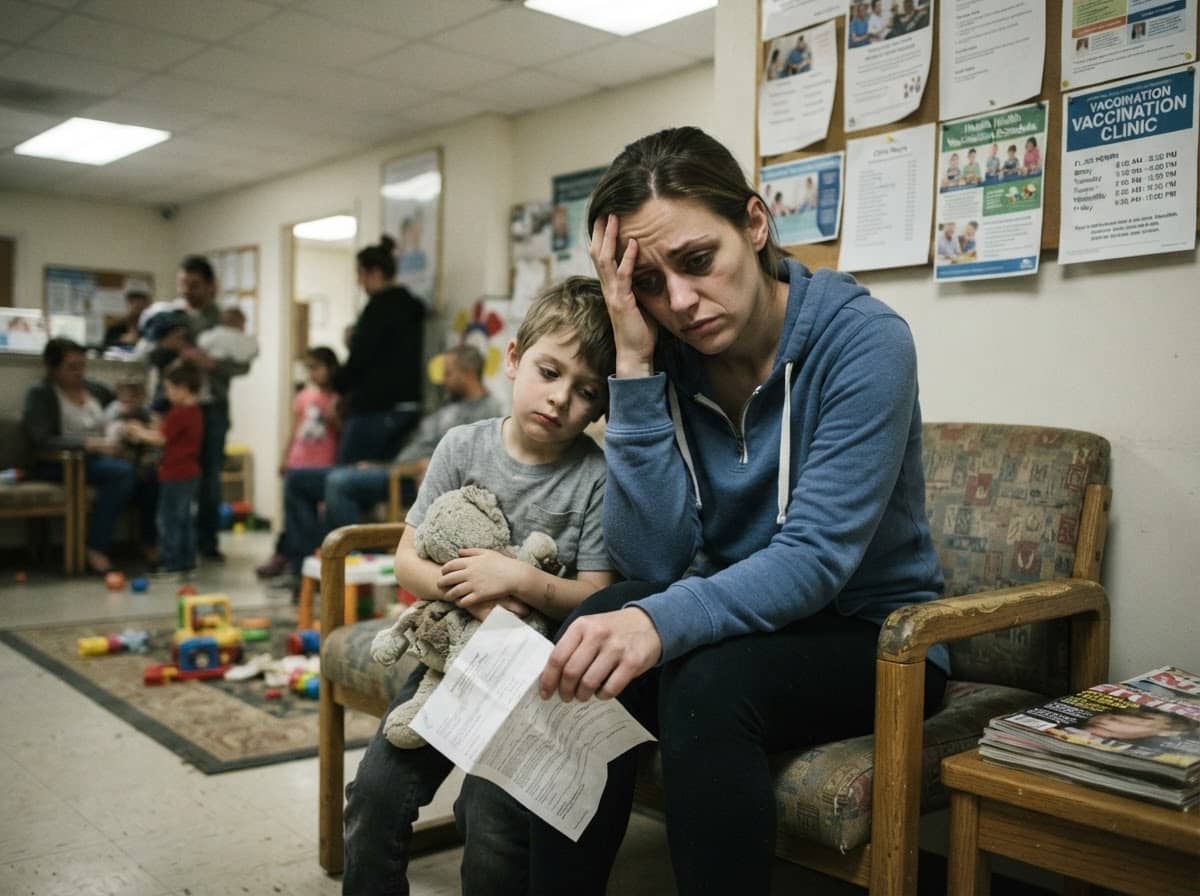
Parents notice change in their children before instruments do. A parent saying that a child is not themselves, is unusually difficult to rouse, or is behaving in a way they have never seen is offering clinical information, not anxiety.

Failure to weigh that information properly is a recognised contributor to harm in pediatric care, and it appears repeatedly in the records these claims are built on.

Listening to parents in pediatric care

Request your child's complete record: triage and nursing observations, physician notes, medication administration charts, imaging and laboratory results, referral letters, and discharge instructions. Write down the sequence of appointments, what you reported at each, and how it was answered.

Avoid discussing a potential claim with the providers involved in your care. Your next step should be to contact a personal injury lawyer with experience in medical malpractice cases, who can evaluate your situation during a free consultation.

Request your child's complete health record

Get the help you deserve

1-800-567-HURT

Call NOW for a free consultation

Recent Articles

Pediatrician and neonatologist care
July 28, 2026

Pediatrician vs. Neonatologist: What Is the Difference and Why It Matters for Your Newborn

Learn how paediatricians and neonatologists differ in training, responsibilities, and care settings, and why those roles matter when a newborn is harmed.

Read article →


Newborn affected by perinatal asphyxia
June 15, 2026

What Is Perinatal Asphyxia? Causes, Signs, and When a Birth Injury Raises Questions

An overview of perinatal asphyxia, its causes and signs, possible long-term effects, and when care around delivery may raise questions.

Read article →
Medical malpractice lawyer reviewing a case
June 8, 2026

What Does a Medical Malpractice Lawyer Do?

Explore how lawyers assess potential claims, gather medical evidence, evaluate losses, advance claims, and manage legal deadlines.

Read article →

Frequently Asked Questions

How is a pediatric claim different from an adult one?
The standard reflects pediatric practice. Children have age-specific vital sign ranges, weight-based dosing, and different patterns of deterioration. Care that would be adequate for an adult can fall below the standard for a child.
My concerns were dismissed and my child got worse. Does that matter?
Yes. A parent reporting a change in their child is providing clinical information, and failure to weigh it properly is a recognised contributor to harm. What you reported and how it was documented are often central to a review.
Which conditions are most often missed in children?
Claims frequently involve sepsis, meningitis, diabetic ketoacidosis, dehydration in infants, appendicitis, and fractures missed on imaging — conditions that progress quickly and whose early symptoms can resemble ordinary childhood illness.
How do medication errors happen in children?
Pediatric doses are calculated by weight, which adds a calculation step that adult prescribing does not have. A misplaced decimal or an outdated weight can produce a very large error, which is why independent double-checks are expected for higher-risk medications.
Can a claim be brought on my child's behalf?
Yes. A parent or guardian acts as litigation guardian and advances the claim on the child's behalf. Parents may also have claims of their own, including for the care they provide and the income they lose in providing it.
What if the harm only became apparent later?
That is common where an injury affects development. Records are generally retained, and a review can still be carried out when concerns emerge months or years afterwards.
What compensation may be available?
Depending on the case, compensation may cover therapy and rehabilitation, assistive equipment, educational supports, home and vehicle modifications, attendant care, loss of future earning capacity, income lost by a parent providing care, and pain and suffering.
What is the Canadian Medical Protective Association (CMPA)?
The CMPA is a mutual defence organization that provides legal defence and liability protection to physicians in Canada. When a medical malpractice claim is filed, the CMPA typically represents the physician. Having experienced legal representation on your side is important when facing the resources of the CMPA.

Looking for more answers?

Browse clear, plain-language answers to the questions we hear most about medical malpractice claims.

See All Medical Malpractice FAQs